
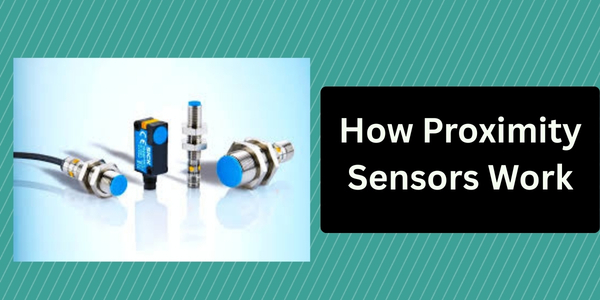
How Proximity Sensors Work: Types, Working Principle and Applications
How Proximity Sensor Works? A Complete Guide to Proximity Sensors
Proximity sensors are widely used electronic devices that detect the presence of objects without physical contact. These sensors are an essential part of modern automation systems, robotics projects, industrial machines, and smart devices. From automatic doors and smartphones to robotics and manufacturing systems, proximity sensors help detect nearby objects accurately and efficiently.
The ability to detect objects without touching them makes proximity sensors extremely useful in environments where physical contact could cause damage or wear. Due to their reliability, durability, and fast response, proximity sensors are widely used in industrial automation, security systems, robotics, and consumer electronics.
In this guide, we will explore how proximity sensors work, their types, components, advantages, and real-world applications.
What is a Proximity Sensor?
A proximity sensor is an electronic sensor that detects the presence or absence of an object within a certain distance. Unlike traditional mechanical switches, proximity sensors do not require physical contact with the object to detect it.
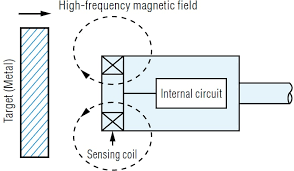
These sensors operate by emitting a signal such as infrared light, electromagnetic field, ultrasonic waves, or capacitive signals and then detecting changes in the signal when an object enters the detection area.
When the object is detected, the sensor sends an electrical signal to a controller or microcontroller, which then performs a specific action such as stopping a machine, activating a robot, or turning on a device.
Working Principle of Proximity Sensor
The working principle of a proximity sensor depends on the type of sensor being used, but the general concept remains similar.
The sensor generates a field or beam in its surrounding area. When an object enters this detection field, the signal changes and the sensor detects the object.
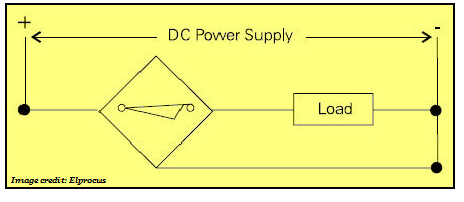
The working process typically involves the following steps:
-
The sensor generates a signal such as light, electromagnetic field, or sound wave.
-
This signal spreads into the surrounding environment.
-
When an object comes within the detection range, the signal is either reflected or disturbed.
-
The sensor detects this change in the signal.
-
The sensor converts this change into an electrical output signal.
This output signal can then be used to trigger actions in machines, robots, or electronic systems.
Main Components of a Proximity Sensor
A typical proximity sensor consists of several important components that allow it to detect objects effectively.
Oscillator or Signal Generator
The oscillator generates the sensing signal such as electromagnetic waves, infrared light, or ultrasonic waves.
Sensing Element
This component detects the changes in the signal when an object enters the sensing range.
Signal Processing Circuit
The signal processing circuit analyzes the detected signal and determines whether an object is present.
Output Circuit
The output circuit converts the detected signal into an electrical output that can be used by control systems.
These components work together to ensure accurate and reliable object detection.
Types of Proximity Sensors
There are several types of proximity sensors used in electronics and industrial automation. Each type works using a different sensing method.
Inductive Proximity Sensor
Inductive proximity sensors detect metal objects using an electromagnetic field. When a metal object enters the field, it changes the magnetic flux, allowing the sensor to detect its presence.
These sensors are widely used in industrial automation, CNC machines, and metal detection systems.
Capacitive Proximity Sensor
Capacitive proximity sensors detect objects by measuring changes in capacitance. These sensors can detect both metal and non-metal materials, including plastic, glass, wood, and liquids.
They are commonly used in level detection systems and packaging industries.
Infrared (IR) Proximity Sensor
Infrared proximity sensors use infrared light to detect objects. The sensor emits infrared radiation and detects the reflected light when an object is nearby.
These sensors are widely used in:
-
Robotics projects
-
Line follower robots
-
Obstacle detection systems
Ultrasonic Proximity Sensor
Ultrasonic sensors use high-frequency sound waves to detect objects. The sensor emits ultrasonic waves and measures the time taken for the echo to return after hitting an object.
These sensors are commonly used in:
-
Distance measurement
-
Parking assistance systems
-
Liquid level detection
Photoelectric Proximity Sensor
Photoelectric sensors detect objects using light beams. When an object interrupts or reflects the light beam, the sensor detects its presence.
These sensors are commonly used in conveyor belt systems and industrial automation.
Advantages of Proximity Sensors
Proximity sensors offer several advantages compared to traditional mechanical switches.
Non-Contact Detection
The sensor can detect objects without touching them, reducing mechanical wear and damage.
High Reliability
Because there are no moving parts, proximity sensors have a longer lifespan.
Fast Response Time
They can detect objects almost instantly, making them suitable for real-time automation.
Durable and Robust
Many proximity sensors are designed to operate in harsh industrial environments with dust, vibration, and moisture.
Low Maintenance
Since they do not rely on physical contact, they require very little maintenance.
Applications of Proximity Sensors
Proximity sensors are used in many industries and electronic systems. Some common applications include:
Industrial Automation
Proximity sensors help detect objects on conveyor belts, control machine operations, and improve manufacturing efficiency.
Robotics
Robots use proximity sensors for obstacle detection, navigation, and environment sensing.
Smartphones
Modern smartphones use proximity sensors to detect when the phone is close to the user’s face during calls and automatically turn off the screen.
Automatic Doors
Many automatic doors use proximity sensors to detect approaching people and open automatically.
Vehicle Parking Systems
Ultrasonic proximity sensors help drivers park vehicles safely by detecting nearby obstacles.
Security Systems
Proximity sensors are used in motion detection systems and alarms to detect unauthorized movement.
Proximity Sensors in Robotics Projects
Proximity sensors are widely used in robotics and electronics learning projects. They help students and engineers build smart systems that can detect objects and interact with their surroundings.
Some popular projects include:
-
Obstacle avoidance robot
-
Line following robot
-
Smart parking system
-
Automatic lighting system
-
Object counting system
These projects help learners understand automation and sensor technology.
Why Buy Proximity Sensors from Roboucreate?
If you are working on robotics projects, automation systems, or electronics learning, Roboucreate provides a wide range of high-quality sensors and components.
Roboucreate offers:
- High-quality robotics components
- Affordable sensors for students and hobbyists
- Reliable electronics modules
- Fast shipping across India
- Technical support for projects



Add comment